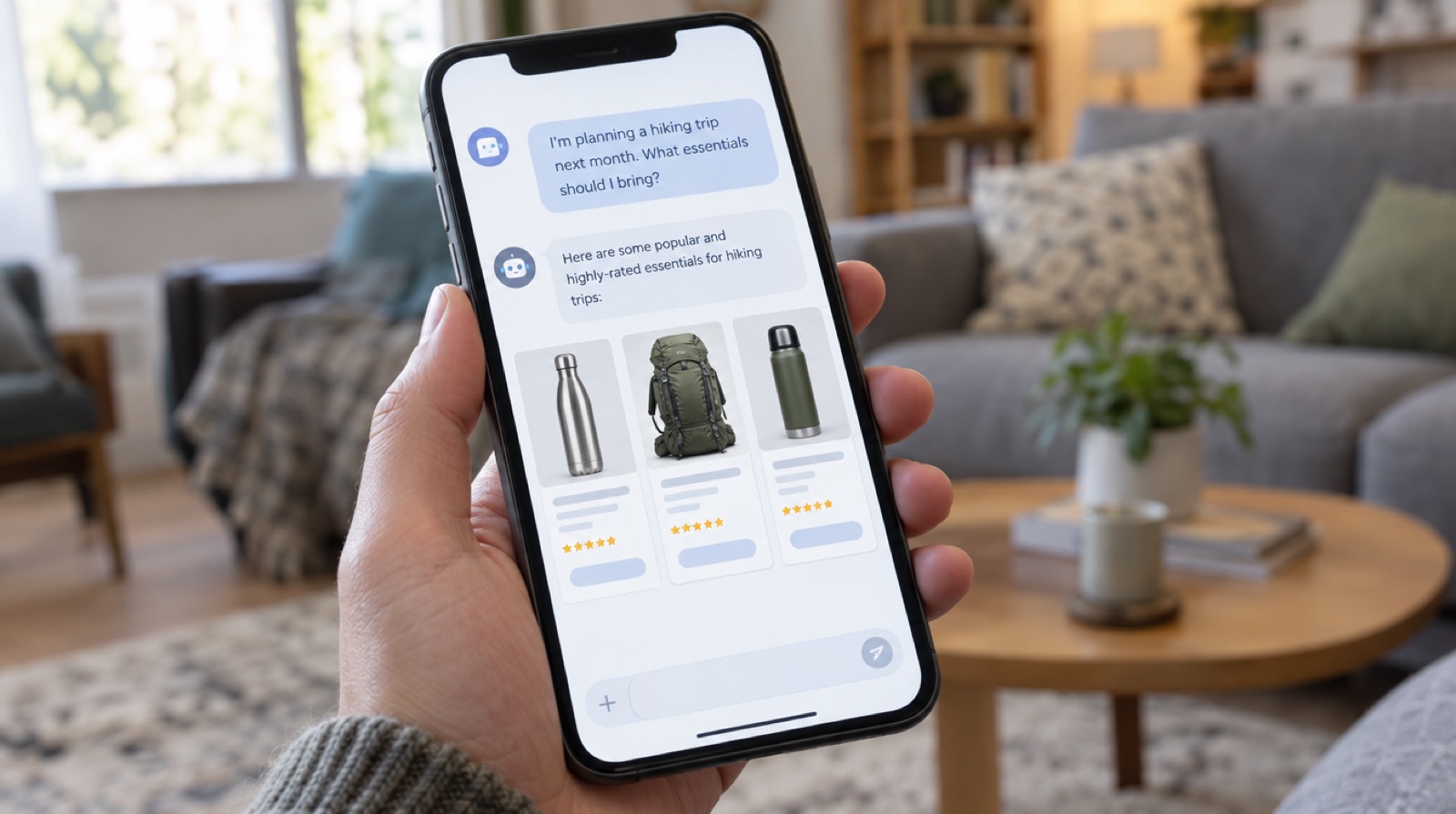
At unBoxed 2026 in late September, Amazon announced the biggest change to its ad platform in years. The advertising console and the DSP are now one product. It’s called Amazon Ads Agent, and it comes with an interface where you chat with an AI to build and run your campaigns.
A lot of sellers have asked us the same thing since. Does this change anything for my Sponsored Products tomorrow morning? Short answer: not much yet. But it will move fast, and it’s better to get your account ready now.
What Amazon Ads Agent is
Until now you had two worlds. The Amazon Ads console for Sponsored Products, Sponsored Brands and Sponsored Display. And the DSP for programmatic display and video, which in practice was for big budgets.
Amazon merged both into one platform. The DSP name is gone. On top of it, Amazon adds a conversational assistant: you describe your goal, it suggests a campaign structure, audiences and keywords, and it waits for your approval before launching anything.

In Europe, the agent part already landed on the DSP side. It can build a campaign structure from a media plan you upload. Since April 2026 it supports 18 languages.
What is live, what is in beta
This is where it gets blurry. There are a lot of announcements and the dates vary depending on the source. Here is what we see in early November 2026.
The unified interface. Rolling out. If you still see the old console, that’s normal.
The conversational assistant. Expanded closed beta. Not open to every seller yet, especially outside the US.
Full Funnel Campaigns. One campaign that covers sponsored ads, display, video and streaming TV. Open beta in the US. Amazon reports 67% higher long term ROAS and 29% lower new to brand acquisition cost in its beta. Those are Amazon’s numbers, on advertisers Amazon picked.
DVA+. Display, video and audio under one budget. Beta in the US, general availability targeted for 35 countries in Q1 2027.
Review Requests. A new ad type that asks buyers for a review. We cover it in our article on Review Requests.
The Amazon Ads MCP server. Open beta since early 2026, with more than 115 actions. It’s what lets an outside AI agent read and edit your ad account.
For most sellers, the bulk of the budget stays in Sponsored Products. Nothing breaks there. Your campaigns, bids and targets stay in place.
The real change is somewhere else. Amazon is pushing everyone toward broader campaigns where its AI decides the split. More formats in one campaign, fewer levers for you.
That’s handy when you’re starting out. Less so when you spent months isolating your profitable keywords. A Full Funnel campaign that mixes search, display and TV is also a campaign where you see less clearly what actually pays.
Keep one simple thing in mind. Amazon’s agent optimizes for Amazon. It doesn’t know your margin, your product cost, or what you sell on your own site. It doesn’t know that a sale at 30% ACOS loses you money when your margin is 25%.
How to get ready before Q4
Black Friday is November 27 and Cyber Monday is November 30. This is not the time to move everything into a beta format. Here is what we recommend.
1. Keep the campaigns that work. Don’t break a profitable structure to test a new format during peak season.
2. Test small, after the peak. If you have access to Full Funnel or DVA+, keep it for January, with a budget you’re fine losing and a clean comparison period.
3. Enter your product costs. Without COGS per ASIN, you can’t tell whether Amazon’s AI makes you money or just revenue. It’s the first thing we look at in the free audit.
4. Track your organic rank. When Amazon takes over the ads, your organic rank becomes your only stable reference. If ad spend goes up and your organic rank doesn’t move, you’re just buying traffic. That’s what the PPC Assist Rank Tracker is for, see the features page. And on the organic side, Amazon’s AI is changing things too: more in our article on Rufus and Alexa for Shopping.
What about outside AI agents
The most interesting part of the announcement is the MCP server. Amazon accepts that AI agents other than its own will run ad accounts.
That’s what we do with Kong, our agent inside PPC Assist. It reads your ad data, your P&L and your costs, and suggests actions you approve one by one. No black box. You can also connect your account to Claude or ChatGPT with our MCP server and ask your questions directly.
The difference with Amazon’s agent is simple. Kong starts from your profitability, not from how much you spend on Amazon.
Bottom line
Amazon Ads Agent is where Amazon is heading for the next few years. More AI, more mixed formats, fewer manual settings.
For this Q4, don’t change anything structural. Get your data ready, track your organic rank, and test the new formats in January with a real test budget.
If you want to see how we run a launch end to end with these tools, we’re documenting in public the US launch of a supplement with Clément from Stupid Seller. Episode 1 is on YouTube (in French).


 Nassuf